register  login
Pinterest Twitter Facebook

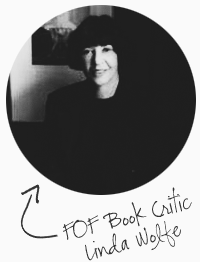
Can’t get a read on what your friends and family want for the holidays? Here’s the ultimate list of books to GIVE this holiday season brought to you by FOF book critic Linda Wolfe, the award-winning author of 10 books and a 12-year veteran of the National Book Critics Circle.

Then comment below for a chance to RECEIVE one of Linda’s top picks–”Then Again,” Diane Keaton’s new memoir. (Three FOFs will win.)

FOR CELEBRITY MEMOIR BUFFS:


“Then Again” by Diane Keaton.  Random House.  291 pages

Keaton’s memoir, “Then Again,” is not just her story, it’s her mother’s as well.  Dorothy Keaton Hall, who died at the age of eighty-six, left behind her eighty-five journals and scrapbooks that Keaton never bothered to read while her mother was alive.  But in 2008, after her mother’s death, she began ploughing through them, in the process discovering things about her mother she never knew – among them her mother’s thwarted ambitions and her early fear of memory loss.

Keaton uses Dorothy’s diaries as a scaffolding from which to explore and recount her own life: her girlhood insecurities and her adult strengths, her stunning career, her love affairs with Woody Allen, Al Pacino and Warren Beatty, and her late-in-life realization that despite the persona she’d cultivated as a woman who, like Garbo, preferred being alone, her life felt empty without children.  At the age of 50, she adopted two of them, and became as engaged a mother as her own had been.

The book is a bit scattered – as one might expect a book of Keaton’s to be – with hasty entries and more thoughtful ones, reflections that are to the point, and others that are vague and puzzling.  It’s really rather like a scrapbook itself, a collection of observations, reflections, and images, rather than a straightforward memoir.  But it’s charming, just like its author.   We learn that this famous beauty was so critical of her body that she became bulimic, stuffing herself with favorite foods only to void them right after consumption.  It’s also poignant.  We learn how sad it makes Keaton feel to consider the difference between her own life and that of her mother:  starting in her fifties, after her children grew up and left her with an empty nest,  Dorothy endured years of loneliness, whereas Keaton in her fifties has been able to come “out of isolation into a kind of family-of-man scenario, complete with an extended family, new friends and much needed ordinary activities.”
The book is an homage to her mother, a tribute to her own children, and an affirmation of woman’s ability to keep growing throughout life.


“Bossypants” by Tina Fey.  Little Brown, 277 pp.

Tina Fey, creator and star of TV’s “30 Rock” and former head writer and occasional star on “Saturday Night Live,” has written not a memoir, exactly, but a collection of chronological essays about important periods of her life – including the one where she gets her first period.  Her mother gives her a starter’s kit: some sanitary napkins, panty liners, and two pamphlets, one for a girl to read, the other for her mother to read and discuss with her.  That 10-year-old Fey’s mother hasn’t bothered to read her pamphlet but just turned it over to her daughter isn’t half the fun here; what’s funnier is that Fey remains totally unprepared for her first bleed, and doesn’t even recognize what is happening to her when her underthings turn red.  “I knew from commercials that one’s menstrual period was a blue liquid you poured like laundry detergent onto maxi pads to test their absorbency,” she writes. This wasn’t blue, so…I ignored it for a few hours.”

If you don’t find this funny, you’d best stop reading.  Period. (Pun intended.)
The book contains Nora Ephron-like tips for women entering the male-controlled work world: “No pigtails.  No tube tops.”  And “You’re not in competition with other women; you’re in competition with everyone.”  Of interviewing for a job on “Saturday Night Live,” Fey writes, “Only in comedy does an obedient white girl from the suburbs count as diversity.”  Of going to college at the University of Virginia, “I spent four years attempting to charm the uninterested.”  Of turning forty, “I need to take my pants off as soon as I get home.  I didn’t used to have to do that. But now I do.”  Of doing a photo shoot, “The makeup artist will work methodically on your eyelids with a series of tickly little brushes for a hundred minutes,” and “at really fancy shoots, a celebrity fecalist will study your bowel movements and adjust your humours.”

If you don’t love Fey, I’d say you don’t have a sense of humor, let alone good bodily semifluids.

FOR FICTION LOVERS:


“The Marriage Plot” by Jeffrey Eugenides. FSG, 406 pp.

Like a Jane Austen novel written for our own times, the plot of Eugenides’ engaging new book, “The Marriage Plot,” concerns a young woman, her suitors, and her quest for a lifelong partner.  But our world is a far more confusing one than the marriage-means-happy-ending society inhabited by Emma and Elizabeth and Austen’s other heroines. Finding one’s way in it is far from simple, and Eugenides’ heroine, Madeleine, as well as her two suitors, Leonard and Mitchell, are having a hard time when the book begins and the three of them, students at Brown in 1982, are about to graduate.

Madeleine, a  literature student who’s pretty, rich, and sexually-inquisitive, is desperately in love with Leonard, a brilliant but bipolar science student who initiates her into physical intimacy but can’t quite commit to their relationship.  And Mitchell, fascinated by religion and philosophy, is in love with Madeleine, who couldn’t care less.

After they graduate, Madeleine, unsure of what kind of career to pursue, flounders. Leonard learns that brilliance isn’t enough, and Mitchell, searching for life’s deeper meanings by working with Mother Teresa in India, loses his youthful idealism.  I won’t tell you who Madeleine ends up with, but, without giving away too much, I want to say that despite having known a few manic-depressives and read a great deal about that illness, the way Eugenides shows us the awful progression of the disease beats any rendition I’ve ever read in fiction. Equally special is his satirical take on the absurd literary theories in vogue in the eighties.

Witty and moving, this book about love, sex, and coming of age, gets being young in the eighties altogether right.  And I suspect it’s pretty accurate about the pleasures and problems of being young in any decade.


“State of Wonder” by Ann Patchett.  Harper/HarperCollins.  353 pages.

I reviewed this book at length earlier this year, so I’ll be brief and just say here that if I had to tell you my choice for the “Number One Best Book of 2011,” it’d be “Age of Wonder.”  With more than a touch of Joseph Conrad’s “Heart of Darkness,” this book is a stirring evocation of a primitive world, a mystery tale, and a deft exploration of the character of two brilliant women.  In the depths of the Amazon, the heroine, self-effacing Dr. Marina Singh, must discover the secrets that the imposing Dr. Annick Swenson, a one-time mentor of hers, is hiding from the rest of the world. She also must learn how to live and even thrive in barbarous surroundings, and become psychologically strong enough to defy her teacher.

You’ll be with Marina, learning her thoughts as if inside her head and experiencing her alien surroundings with her distinctive eyes and ears, throughout this stunning tale.


11/22/63 by Stephen King. Scribner.  849 pp.

I’m not a fan of horror stories, don’t like reading about cars with minds of their own, killer viruses or crazed fans, so I rarely read King.  But this book is about horror of a different sort–and it’s terrific. The horror in “11/22/63″ is time, an adversary that each of us must do battle with, and which always, whatever our circumstances, defeats us, taking away our abilities, our strengths, and all that we most prize.

A science fiction tale with that hoary old subject, time travel, “11/22/63″ recounts the experiences of a Maine schoolteacher, Jake Epping, who goes back into the world of the late nineteen-fifties bent on a mission: to stop Oswald from assassinating John F. Kennedy. King recreates that world with meticulous and delightful detail, from the vibrant preservative-free taste of root beer, to 19.9 cents-a-gallon gasoline, to music you could really dance to.  But the past has its drawbacks.  “It’s a time,” King points out, “for which a lot of people felt nostalgic.  Possibly because they had forgotten how bad the past smelled.”
Not only does the past smell bad, it’s rife with poverty and racial strife.  Yet the good-natured Epping begins to prefer the past, with all its unsavoriness, to his actual present.  He takes a job as teacher in a small Texas town, gets to know the Oswald family and–this will delight conspiracy theorists–tries to determine if Oswald was the only person responsible for Kennedy’s death.  He also falls passionately in love with the school librarian.

King has bigger fish to fry in this work than in most of his other novels.  The book has a gripping plot and a likeable hero in pursuit of an ominous killer, but the author is also in pursuit of the answers to the Big Questions:  Would today’s world be different if Kennedy had not been killed?  Is there any way to slow time’s indifference to human life?   Is love the only thing that makes life worth living?  And, is loss always our inevitable fate?

FOR HISTORY FANS:


“Catherine the Great: Portrait of a Woman” by Robert K. Massie, Random House, 625 pages

Despite its heft, this doorstopper of a biography goes down as smooth as fine Beluga caviar.  It’s the story of Catherine the Great, an obscure German princess who deposed her ineffectual alcoholic husband, Czar Peter III,  in 1762, seized the throne of Russia, and ended up ruling that vast turbulent country for more than thirty years.

In Massie’s hands, the start of the story has all the elements of a fairy tale: a child scorned by her mother, plucked from obscurity by a kindly aunt (who just happened to be the daughter of the czar of Russia), decked out by that fairy godmother of a relative in furs and jewels, and married amid wild celebration to the future czar.  “An adolescent girl,” Massie tells us, “was launched on a great adventure.”

But of course, Catherine was no fairy tale princess.  And her story becomes ever more interesting as she learns to be a ruler, finding her way to gain and hold onto power despite constant threats.  A quick study, she had taught herself at an early age was always to appear courteous and humble, to be a good listener, and to mask her considerable brains.  But as she matured, her brilliance became evident to all who knew her, evoking respect even from such luminaries as Voltaire and Diderot.  “I would say about myself,” she wrote in “A Secret Confession,” a private account of her life and loves, “that I was a true gentleman with a mind more male than female.”

Catherine reformed and reorganized Russia, she encouraged the arts, education and medical care, put down powerful rebellions, survived innumerable political crises and–somewhat ruthlessly–accomplished several land grabs that greatly extended Russia’s territory.  But, aside from being an astute monarch, she was above all a woman, endlessly looking for the love she had been denied by her mother and lacked in her marriage–her husband had refused to make love to her during their nine years together. She said she was “Loath to be without love for even a single hour,” took numerous lovers, and wrote to one of them, “If you want to keep me forever, then show me as much friendship as love.”
Massie’s Catherine is not only a political genius, but a flesh-and-blood woman who at times sounds just like one’s BFF.


“1493: Uncovering the New World Columbus Created” by Charles C. Mann. Knopf 535 pp.

Charles C. Mann’s best-selling “1491: New Revelations of the Americas Before Columbus” was a sweeping examination of life in the Americas before the arrival of Columbus.  His “1493″ takes up the story of what followed: the vast spread of plants and peoples that is known as the “Columbian Exchange.”  “After 1492,” Mann explains, “the world’s ecosystems collided and mixed as European vessels carried thousands of species to new homes across the oceans. The Columbian Exchange…is why there are tomatoes in Italy, oranges in Florida, chocolates in Swtizerland, and chili peppers in Turkey and Thailand.  To ecologists [it] is arguably the most important event since the death of the dinosaurs.”

Indeed, Mann tells us, it has created an altogether new ecological era, the “Homogenocene” or the Age of Homogeneity, the era in which we live, although most of us just call it “Globalization.”  Undeniably, we have become One World, where what happens in Greece affects our stock market, what happens in China  effects our manufacturing, what happens in Africa affects our hospitals.  But the process, so recent-seeming, started ‘way back then, immediately after Columbus’s history-altering discovery.

The Columbian Exchange has vastly benefited mankind, spreading foods that not only delighted, like those tomatoes and oranges, but foods that filled hungry bellies, like wheat and corn. Nevertheless, benefit and detriment are the two faces of the Exchange’s coin. Take the exchange of plants: along with its beneficence it brought pests never before known in the West and mighty difficult to eliminate. Or take the spread of peoples: the European settlers who descended on the ancient native populations destroyed them both actively and inadvertently–inadvertently because they brought with them diseases for which these populations had no resistance. Today, it is Western society that is threatened by diseases for which we have no resistance, viruses transferred from monkeys to man in Africa and then brought–by plane–to new shores.

Mann, an extremely lively writer, gives us fascinating portraits of some of the little known figures responsible for the spread of specific plants, animals, people and germs.  And he warns us about the most frightening consequences of the Columbian Exchange–not just the spread of diseases, but climate change and the destruction of ancient species.  “On the one hand,” he writes of our Age of Homgeneity, “people want the wash of goods and services that the worldwide market provides.”  But on the other hand, “Things feel changed and scary.”

You can say that again!

Enter to win Then Again, Diane Keaton’s new memoir by leaving a comment below.

Three FOFs will win.
(See all our past winners, here.)
(See official rules, here.)
Contest closes December 15, 2011 at midnight E.S.T.

COMMENTS (196)


A book about a pedophile-child relationship its not what you’d normally refer to as a “beach read,” but you might want to reconsider. According to FOF Linda Wolfe, Margaux Fragoso’s Tiger, Tiger, is, like the best beach reads, impossible to put down. Unlike many beach reads, however, it’s also impossible to forget. Here’s why….

(Plus, enter to win a copy of Tiger, Tiger when you answer this question in the comments below: What’s the best book you’ve read so far this year?)

(P

One of the most compelling books I’ve read recently is Margaux Fragoso’s Tiger, Tigernot to be confused with the controversial Tiger Mother or the precocious Tiger’s Wife (not to mention the Broadway show Bengal Tiger at the Baghdad Zoo – what is it with tiger titles lately?)  Fragoso’s book is a memoir, the astonishing story of how, at the age of seven, she was seduced by a man more than forty years her senior, a once-jailed pedophile with whom she maintained a secret, intimate relationship until she was twenty-two, and he, at the age of sixty-six, committed suicide.

Perhaps in the previous sentence I should have said “why” she was seduced and “why” she remained in the relationship instead of “how,” for this book, explicit, insightful, and elegantly written, has much to tell us about what makes certain children easy prey for pedophiles.

In Fragoso’s case, her earliest childhood years were wrenching.  Raised by an explosive, alcoholic father and a mentally unstable mother, Fragoso grew up fearing her father, having to mother her mother, and longing for what all children want: attention, encouragement, praise.  She meets Peter Curran, the man who will give her these things, while bathing at a neighborhood pool with her mother. Watching him splash and play with two little boys she assumes are his sons, she paddles up to him and asks, “Can I play with you?”

Curran obliges, includes her in his games with the boys – who turn out to be the sons of a woman in whose house he rents a room  – and several days later invites her and her mother to visit the family and the house.

It’s a place that’s vibrant with life: in addition to the boys and their mother, the house is home to a large furry dog, a tankful of iguanas, a cage full of rabbits, and even a small baby alligator. Both Margaux and her mother are enchanted, and become regular after-school visitors.  Curran calls Margaux “princess” and “angel,” tells her how talented she is when she writes little stories or  puts on little playlets, and patiently plays whatever games she proposes.  He also introduces games of his own choosing: “an enhanced version of Itsy Bitsy Spider,” “Mad Scientist” and “Tickle Torture Time.”  Then one day he takes Margaux down to the basement to check on the health of Fiver, a sick rabbit, and asks her to look at his penis.

In a shattering scene, Fragoso describes her eight-year-old reaction to Curran’s request.

“I climbed into the cart with Fiver and said, ‘Look, Peter!  I’m a rabbit!’

“I started to drink from the water bottle, tasting the sweet metal and the sweet, warm water.  I picked up [Fiver’s food], offered it again to him, and when he refused it, I ate it myself….Peter came and picked me up gently, placed me on my feet; but I instantly sank again, to my hands and knees, to crawl on the ground like a baby, to feel the cold hard floor beneath my hands.

“‘I’m a baby now, not a rabbit.  No, wait.  I’m a baby rabbit!  Chase me!’”

Curran ignores her agitation and, dropping his pants, exposes his genitals.   “The whole contraption looked like a bunless hot dog with two partly deflated balloons attached,” Fragoso writes.  But, afraid to offend this man who has become the affectionate  male figure her life has so lacked, she tries to conceal her disgust and say something nice about the disturbing sight. “It kind of reminds me of….an ice cream cone,” she says.

I’ll spare you what happens next.  Suffice it to say that Curran makes her his sexual toy.  But after years of being abused by him, when Fragoso becomes a teenager, she turns the tables on him.  By then, aging and in ill-health, he’s become dependent on her, and knowing this, she torments him, mocking him for his weakening legs and toothless mouth and maintaining the relationship even as she begins dating boys.

Throughout this disturbing tale, Lolita from Lolita’s own viewpoint,  the author is unflinchingly honest, aware of her own complicity in the abusive relationship.  It makes her book absolutely mesmerizing. Fragoso’s insights into pedophiles and the damage they inflict on the children they entrap are profound.  But just as importantly – arguably even more importantly — she is a profoundly talented writer.  This is a book you won’t be able to put down, and once you’ve finished it, won’t be able to forget.

Enter to win a copy of Tiger, Tiger when you answer this question in the comments below: What’s the best book you’ve read so far this year?

(See all our past winners. See official rules. One winner is chosen at random from all those who ask a question. Contest closes July 7, 2011.)

COMMENTS (123)


In A Widow’s Story, Joyce Carol Oates’s describes the painful year following her husband’s sudden death. FOF book reviewer Linda Wolfe, a widow herself, praises Oates’s warmth, but questions her sincerity.

A Widow’s Story, Joyce Carol Oates’s memoir about her first year of widowhood after the death of her husband Ray Smith, a scholar and editor to whom she’d been married for almost fifty years, is bound to call to mind Joan Didion’s The Year of Magical Thinking.  Since hardly a book lover over fifty hasn’t read the Didion work–and you must be a book lover if you’re reading my FOF reviews–I’ll get the comparisons out of the way right upfront. Where Didion was concise, precise and poetic, Oates is verbose, expansive, and prosaic, inclined to give us everything and the kitchen sink, from reporting her terrors about entering her empty house and running out of death certificates, to reprinting emails the complete emails she exchanged with friends. Nevertheless, this is a warmer work than Didion’s, more intimate, more straightforward, and truer to the actual day-by-day, minute-by-minute thoughts and experiences of the newly-widowed woman. (I’ve been there myself, so I know the territory.)

Every widow will recognize herself in Oates’s thoughts and experience. Take her anguish about being left alone:  “When you are not alone, you are shielded,” she writes, “from the stark implacable unspeakable indescribable terror of aloneness. You are shielded from the knowledge of your own insignificance….When you are loved you are blind to your own worth; or, you are indifferent to such thoughts.”

Or take her bouts of what Didion termed “magical thinking”:  remembering the times she traveled without Ray, Oates tries telling herself “with childish logic that if Ray were alive but not with me, that absence would be identical with this absence.”

Then there’s the  bursting into tears at odd moments. The inability to sleep at night. The depression that makes even simple chores seem impossible. The rage at having to secure documents just in order to access one’s money. The horrifying sensation that not just a beloved partner has been lost, but that one’s own self has been lost as well. Above all, the recurrent thoughts of suicide.

Many married women think to themselves–or even say aloud, as a friend of mine said to me just the other day–that if their partners were to die, they’d kill themselves. Oates always imagined she’d choose that course. “Frequently in the past,” she writes, “I had consoled myself that, should something happen to Ray, I would not want to outlive him. I could not bear to outlive him!  I would take a fatal dose of sleeping pills.”

Soon after Ray’s death, she does get out all the leftover sleeping pills and tranquilizers she’s been prescribed over the years, but she doesn’t take any of them. Their presence is reassuring, but she continues to have suicidal thoughts. To the widow, she says, “Suicide promises A good night’s sleep–with no interruptions. And no next day.”

Wrestling with her demons, Oates sets herself the modest goal of getting through each day.  And at book’s end, she declares,“Of the widow’s countless death-duties, there is really just one that matters: on the first anniversary of her husband’s death the widow should think, I kept myself alive.”

Oates doesn’t tell us that besides keeping herself alive, within a year of her husband’s death she found a new partner, became engaged, and in a few months married him. I hate to sound cynical, but I suspect Oates is saving that story for her next book. Too bad. Leaving out this information, which is common knowledge in the literary world, makes this otherwise memorable book seem unfortunately disingenuous.

Linda Wolfe is a renowned journalist, essayist and novelist who happened to move to a new apartment right next door to the Faboverfifty offices. Now she writes brilliant book reviews just for us. Read more about Linda.

COMMENTS (12)


FOF Linda Wolfe, the award-winning author of 10 books and a 12-year veteran of the National Book Critics Circle, picks 2010′s most unforgettable titles. Warm up your Kindle, whip out your library card or just snuggle in bed with a good old-fashioned paper version of one of these works of art.

NEMESIS by Philip Roth
292 pp. Houghton Mifflin. $26.
In the sweltering summer of 1944, the year before World War II ended, a polio epidemic spread throughout Newark, New Jersey, [click to read more]

destroying the lives of many young people, some of whom died, some of whom went on to live as lifelong cripples. Roth, in his thirty-second novel, writes vigorously about the effects of the epidemic on one man, Bucky Cantor, a youthful playground director who is viewed as almost godlike by the boys he teaches to play ball, do exercises, throw the javelin. Due to poor eyesight, Bucky has been denied what he most desires: a chance to serve in the war. But when the epidemic strikes he determines to keep to his post in the playground and care for his charges no matter their – and his – fears about polio. His girlfriend implores him to join her in the presumably healthier air of a summer camp, but he refuses. “This was real war, too,” he thinks, “a war upon the children of Newark.”
What happens to Bucky and the children of Newark is brilliantly evoked by Roth. The book is a triumph of style and sensitivity which culminates in a searing inquiry into the nature of God. The last few pages are among the most breathtaking that Roth has ever written.


OUR KIND OF TRAITOR
by John Le Carré
306 pp. Viking. $27.95
Le Carré, grandmaster of the spy thriller, has written his most suspenseful espionage story in years, [click to read more]

a book about the Russian mafia, international money laundering, stiff-upper-lip British intelligence agents, and two innocents abroad who get dragged–despite their better judgment–into dangerous cloak-and-dagger games. The innocents are Gail Perkins, a young barrister, and her boyfriend, Perry Makepiece, a literature professor and dynamite tennis player. On a much-anticipated Caribbean vacation, they’re approached by an enigmatic Russian bear of a man named Dimitri Krasnov–Dimi for short–who wants to play tennis with Perry. Turns out, he also wants Perry to contact the British government and arrange permanent residence for himself and his family in exchange “for certain informations very important, very urgent, very critical for Great Britain of Her Majesty.” It’s a roller coaster ride from there on in, a tale that will keep you or any of your book-loving friends biting your fingernails and sometimes – how does he do it? – tearing up at the same time.

MOCKINGJAY by Suzanne Collins
390 pp. Scholastic Press. $17.99
This is the third and final novel in Collins’ Hunger Games trilogy. If you haven’t
yet read the first two, The Hunger Games and Catching Fire, you’ve been missing some of the most exciting fiction out there [click to read more]

– and even though the books are written for Young Adults, many of us older adults have been passionately devouring them. Not just to have a peek at what our teenagers are reading, but because the books are inventive, fast-paced, ethically provocative, and have an exceptionally charismatic heroine. She’s a moody, spirited sixteen-year-old, and although her adventures take place in a dystopian future society, she’s as true to life, as the girl next door – or in one’s own house. Mockingjay, for those who’ve read the first two books, is less tightly plotted than The Hunger Games, my favorite, but it’s equally compelling.

JUST KIDS by Patti Smith
279 pp. Ecco. $27.
She’s been called “the godmother of punk” and “punk rock’s poet laureate,” and it turns out she’s a terrific memoirist. [click to read more]

In Just Kids, Smith writes about being a pregnant nineteen-year-old “country mouse,” giving up her baby, and seeking a new life in the edgy bohemian world of sixties New York. Unsure of who or what she will become, she’s helped along her way by meeting Robert Mapplethorpe, the taboo-defying photographer who will become one of the most controversial artists of his time as well as Patti’s friend and lover. Her memoir is full of carefree moments and encounters with famous figures like Janis Joplin and Andy Warhol, but there’s a heartbreaking quality to the tale as, still “just kids,” Patti and Robert head toward the fame and fortune that will eventually strengthen one and destroy the other.

HALF A LIFE by Darin Strauss
205 pp. McSweeney’s. $22
A tiny, compact memoir, this book has all the thrust and power of a car crash, and indeed it’s about a crash [click to read more]

in his senior year of high school, novelist Darin Strauss accidentally ran over a girl on a bike. The girl, a schoolmate of his, died, and in a way, Straus died too. He would never be free from thinking about her, even when doing the most mundane things, like getting a can of soda: “Celine Zilke will never feel a can in her grip,” he’d think, and later, Celine would never go to college, get married, have a child. By the time he himself marries, he has come to feel he’s living for two. He changes from being a crass, book-averse teenager to an academic achiever and a writer of enormous talent. His story is a page-turner and a profound exploration of how we are shaped by, and must live with, the consequences of our actions.

THE WARMTH OF OTHER SUNS by Isabel Wilkerson.
622 pp. Random House. $30.
Starting in the early nineteen-hundreds, black people began leaving the Jim-Crow South in droves and settling down in the North and West. [click to read more]

These immigrants to a new world were not so different from those who fled oppression in Russia, Italy, and other European countries to make better lives for themselves in the freer atmosphere of America. Wilkerson gives us the story of the “epic migration” of blacks, focusing her account on the lives of three fascinating individuals she chose after interviewing more than a thousand people. You’ll learn things about America you never knew before. You’ll come to know her characters intimately (some of them may remind you of the characters in Kathryn Stockett’s The Help). Above all, you’ll be wowed by how readable and absorbing Wilkerson’s important work of history is.

THE IMMORTAL LIFE OF HENRIETTA LACKS by Rebecca Skloot.
369 pp. Crown. $26.
This is that rare thing – a book about science that is engrossing and understandable even to someone like me who got a “D” in biology. [click to read more]

Skloot, a science journalist, spent ten years tracking down the story of a woman who died of cancer in 1951 but whose cells, withdrawn from her cervix during a biopsy, became immortal by virtue of being the first ever reproduced successfully and in profusion in a lab. The woman was Henrietta Lacks, an illiterate mother of five, and the cells–dubbed “HeLa” from the first letters of her first and last names–have been flown to the moon and bought and sold around the world. They have helped with nearly every important advance in medicine: the polio vaccine, chemotherapy, cloning, gene mapping, in vitro fertilization–you name it. But while every science student knows about HeLa cells, virtually no one knew anything much about Henrietta Lacks until Skloot undertook to find out who she was. She tells a whopping good tale about her nervewracking search, and writes with uncommon skill not just about Henrietta and her descendants, but about cell culturing, the interplay between race, poverty and science, the ethics of tissue collection, and the laws that are newly emerging to determine whether our cells belong to science or ourselves.

COMMENTS (33)


FOF Linda Wolfe is a journalist, essayist and fiction writer who happened to move to a new apartment right next door to the Faboverfifty offices. Our brilliant neighbor has written hundreds of articles for publications including New York magazine, the New York Times  and Vanity Fair. She’s also written ten books, many of them about famous crimes, both contemporary and historic. WASTED, her brilliantly researched look at the infamous “Preppie Murder,” received an Edgar Award nomination and was a New York Times “Notable Book of the Year.”

For 12 years, Linda has been a judge for the National Book Critics Circle, an organization that bestows highly coveted awards to the year’s “Best” works of fiction, nonfiction, autobiography, biography, poetry and criticism. Naturally, we asked her to review books for Faboverfifty.  Luckily, she agreed.

You can read her fabulous recommendations, here.

COMMENTS (15)
LABELS:

  • Blog Links

  • Labels

  •  

    About | Site Map | Contact Us | Register | Press | Code of Conduct | Privacy Policy | Terms of Service

    © 2013 Forever Fab, LLC. All rights reserved.