



If you’re FOF and have never been screened for colon cancer, you’re making a big mistake
- FOF: Why should FOF women pay attention to colon cancer?
- Dr. B: There are 106,000 cases of colon cancer every year and 40,000 cases of rectal cancer. Women account for slightly less than half of the cases. The incidence for colon cancer increases significantly after age fifty. Over 90 percent of cases are diagnosed after fifty.
- Colorectal cancer is third largest cancer killer for women (and men), after lung and breast cancer.
- FOF: Can we prevent colon cancer?
- Dr. B: Changing certain personal habits will decrease—not prevent—the risk of developing colon cancer:
- Weight. Obesity can trigger the disease.
- Physical Activity. Begin a regular exercise program. You don’t need to be a decathlon runner, go to the gym or run on a treadmill. Walk for thirty minutes, five days a week. It can be regular walking.
- Diet. Stay away from red and processed meats, such as bacon and ham.
- Eat more fruits and veggies, which will help your stool travel more quickly through your GI tract. The longer food stays in your GI tract, the greater the potential adverse reaction. Fruits, fibers and veggies increase transit time.
- Alcohol. One or two drinks daily are probably okay, but you increase your rate of colorectal cancer if you drink more.
- Smoking. There probably isn’t an organ is your body not impacted by smoking.
- FOF: Is colon cancer curable?
 Dr. B: Yes, if it’s a localized cancer found in its earliest stages, before it has broken through the wall of the GI tract. If colon cancer is caught and treated in its first stage, the five-year survival rate is 90 percent, which is very good. This means the majority of people will live at least five years after diagnosis.
- As the cancer progresses through the wall of the GI tract, to localized lymph nodes and other parts of your body, long-term survival rates decrease.
- FOF: Can colon cancer be detected early?
- Dr. B: Yes. The American Cancer Society recommends a screening test for all average-risk women over fifty. Some women may need to do screening earlier, depending on their predisposition, including family history or some other condition, such as irritable bowel disease (IBD.)
- FOF: Is there one test?
- Dr. B: No, there are a few. Colonoscopy is the gold standard. It visualizes the GI tract and allows the doctor to see and easily remove pre-cancerous polyps.
- A fecal occult blood test lets the doctor examine stool on a card to look for blood, which could be the sign of a bleeding tumor. New stool tests can also screen for the presence of cancer cells.
- Flexible sigmoidoscopy visualizes only the large intestine.
- FOF: How often should we have those tests?
- Dr. B: It depends on which test you do.
- Average-risk women should have the colonoscopy every 10 years after age fifty. This is the current recommendation from the American Cancer Society. If a doctor sees something, or if you have a strong family history of colon cancer, he or she may recommend that you do the test more frequently.
- The fecal occult test should be done every year and the sigmoidoscopy every five years.
- FOF: Every ten years seem like a long time between tests. What if I walk out of the doctor’s office after a negative colonoscopy, and the cancer starts growing that day?
- Dr. B: The cycle of this cancer takes years. It starts as a polyp. So ten years is the recommendation. Of course, if you have symptoms, you shouldn’t wait ten years to check them out.
- FOF: What symptoms should we look for?
- Dr. B: There are often no symptoms for early colon cancer, so you don’t know if you’re having a problem. That’s why you need a screening test.
- As the cancer progresses, you could develop anemia or blood in the stool, see a change of bowel habits, or have bloating or cramping in the abdomen. Bleeding doesn’t mean you definitely have colon cancer, but you should follow it up.
- The older you are, and the further away from screening, the more advanced the tumor will likely be.
- FOF: Does cancer move more slowly in older people?
- Dr. B: Not necessarily.
- FOF: What’s the first thing you do when you learn you have early stage colon cancer?
 Dr. B: You don’t need to follow up the next day, but the sooner you do, the better. You don’t want to risk of the cancer moving to stages 2 or 3.
- You will need some combination of surgery, chemotherapy and radiation therapy. It’s best to see a medical oncologist first (vs. a radiation oncologist) to assess the best approach to take for long-term survival and a decent quality of life. If he thinks radiation is indicated, you may have radiation therapy before chemotherapy.
- If the cancer is very localized, you might only require surgery.
- The American Cancer Society is a great resource to discuss programs and treatments. Call at 1-800-227-2345 or visit www.cancer.org.
- FOF: What percent of the population does not go for some sort of screening?
- Dr. B: 30 to 40 percent of the population over fifty does not have a test of any kind.
- Of the estimated 50,000 people (men and women) who died from colon cancer in 2008, screening could have saved half their lives.
- FOF: That’s an astounding percentage, especially after Katie Couric had a colonoscopy right on live TV to encourage people to get screening.
- Dr. B: It is.
Note: Colonoscopies can be expensive because of the sophisticated equipment used and anesthesia. Unfortunately, people without health insurance may choose not to have the test.
| Author | |
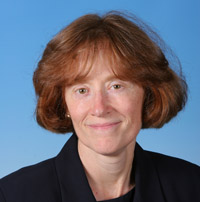 |
American Cancer Society Eastern DivisionDr. Clare B. Bradley is the Chief Medical Officer of the American Cancer Society Eastern Division. She is the recipient of the Society’s prestigious St. George National Award for 2009 for outstanding contributions to the control of cancer. |